
Medical Spa Website Design
Medical Spa Website Design
A medical spa sits in a unique position in the health and beauty industry. It is not a day spa. It is not a medical clinic. It is both, and the website needs to reflect that tension perfectly. Clients arriving on your site are making a decision that combines aspiration with trust. They want to feel the luxury and the transformation, but they also need to know that what you offer is medically credible, professionally delivered, and safe. Get the balance wrong and the site either feels like a generic beauty salon or an intimidating clinical environment. Neither converts. We design medical spa websites that hold that balance correctly, build immediate client confidence, drive bookings, and operate within Australia’s tightly regulated advertising framework for aesthetic services.

The global medical spa market was valued at over USD 21 billion in 2024 and is projected to more than double by 2030. In Australia, the cosmetic injectables sector alone is already valued at $4.1 billion and growing at close to 20 percent annually. The clinics capturing that growth are not necessarily the ones offering the best treatments. They are the ones with the strongest digital presence, the clearest websites, and the most trustworthy online experience. Your website is where that race is won or lost before a client ever books a consultation.
What Makes a Medical Spa Website Fundamentally Different
Most web designers have never built a medical spa website before. They approach it as either a health website or a beauty website and miss the point entirely. A medical spa website has to achieve something neither category does on its own. It has to create an experience that feels premium, aspirational, and deeply personal, while simultaneously communicating clinical credibility, practitioner expertise, and regulatory compliance.
The client journey on a medical spa website is also different. Someone searching for skin rejuvenation treatments or body contouring is often in an exploratory phase. They are comparing multiple clinics, reading about treatment options they may not fully understand yet, and deciding whether they trust a clinic enough to book a consultation. Every page on your site is doing sales work, trust work, and education work at the same time. A designer who understands this builds the site completely differently to one who treats it as a standard booking website.
Beyond the user experience, there is a layer of complexity that does not exist in most other industries. In Australia, the way a medical spa can advertise its services is governed by both AHPRA and the Therapeutic Goods Administration, with new guidelines that took effect in September 2025 significantly tightening what clinics can and cannot say online. A web designer who is not across these rules will create content and a site structure that puts your clinic at regulatory risk from the moment it goes live.
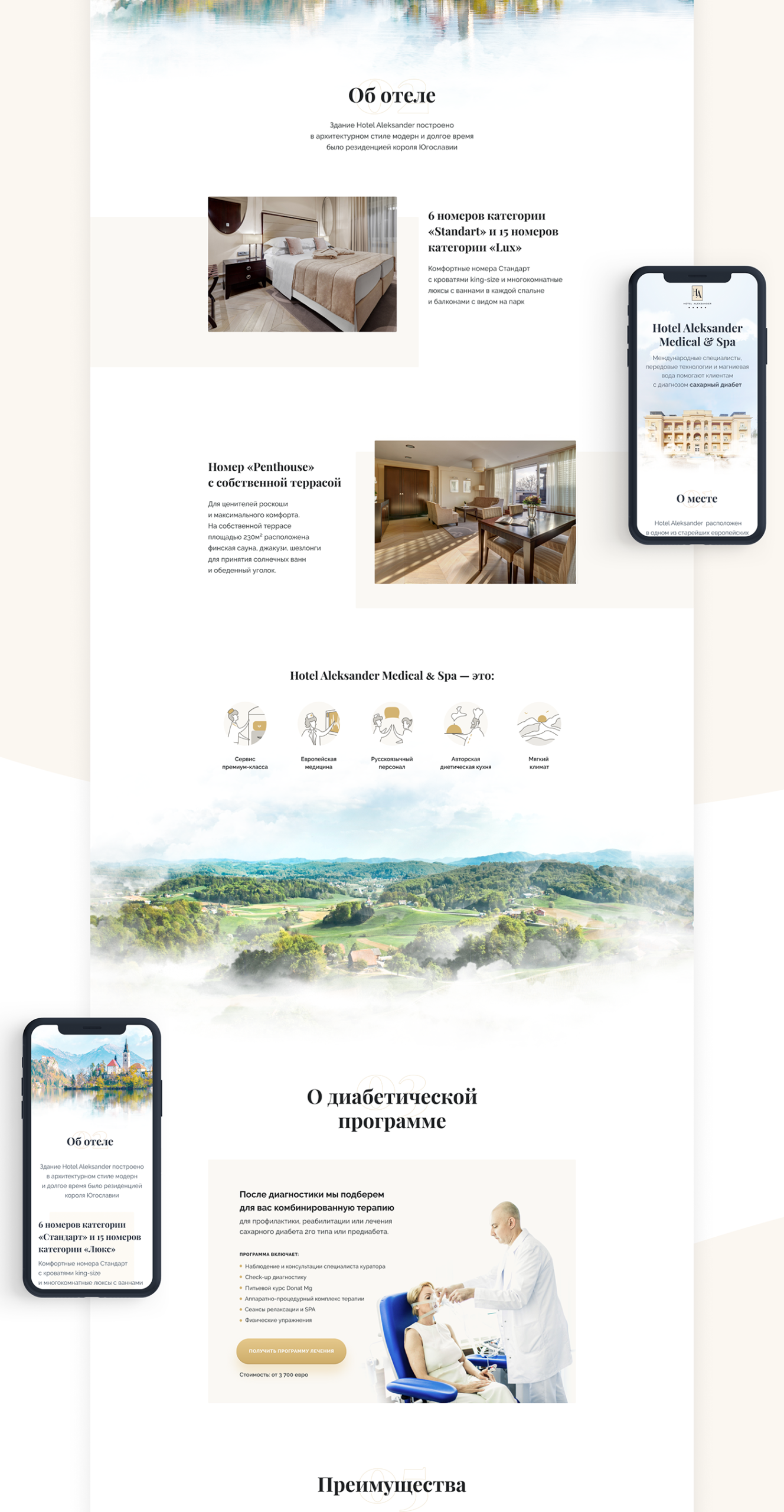
The Design Language of a High-Converting Medical Spa Website
The best medical spa websites do not try to look like hospitals. They do not try to look like day spas either. The design language they use is refined, spacious, and quietly confident. Clean layouts with generous white space create a sense of calm and professionalism that matches the experience a client expects to have in your clinic. High-quality original photography, not stock images, is non-negotiable. Clients can detect generic imagery within seconds and it immediately signals that a clinic is not operating at the level it claims.
Colour palettes in high-performing medical spa websites tend toward neutral, soft, and sophisticated. Creams, warm whites, soft sage, and muted golds communicate luxury without being loud. Typography choices matter significantly in this category. A serif or refined sans-serif headline font paired with a clean body font communicates authority and elegance simultaneously.
The most important design decision on a medical spa homepage is what goes above the fold. Before a visitor scrolls, they need to see who you are, broadly what you offer, and what they should do next. A vague tagline and a beautiful background image without direction is a missed opportunity. The homepage hero section should confirm the clinic’s specialty, signal its positioning, and offer a clear path to booking a consultation or exploring treatments.
TGA and AHPRA Compliance in Australian Medical Spa Websites
This is where most Australian medical spa websites have serious problems, and where the stakes are higher than most clinic owners realise. The regulatory framework governing how a medical spa can advertise in Australia involves two separate bodies with overlapping jurisdiction, and as of September 2025, the rules have become more restrictive, not less.
The Therapeutic Goods Administration governs advertising of therapeutic goods including prescription-only cosmetic injectables. The TGA’s current position is that directly or indirectly advertising prescription-only injectables to consumers is unlawful. This includes using product names, brand names, generic category terms, nicknames, abbreviations, hashtags, and previously permitted phrases like “wrinkle reducing injections” or “dermal fillers” where a reasonable consumer would understand the intent is to promote the use of a prescription medicine. It includes before and after photos where it is apparent the result was achieved through a prescription-only injectable. It includes price lists for those treatments. In the previous financial year alone, the TGA requested the removal of approximately 13,500 advertisements from online platforms.
AHPRA’s guidelines for higher-risk non-surgical cosmetic procedures, which came into effect in September 2025, add a further layer covering injectables, thread lifts, injection lipolysis, sclerotherapy, PRP, and other procedures. These guidelines specify how these services can be described, what kind of social proof is permissible, and what language around outcomes, results, and clinical expertise crosses into non-compliant territory.
What this means for your website in practice is significant. Service pages for aesthetic treatments need to be structured and written in a way that accurately describes the service without making claims about the therapeutic goods used to deliver it. The way your practitioners are presented, the language used around results, and any imagery used to represent outcomes all need to be reviewed through a compliance lens before a single page goes live.
We build medical spa websites with this compliance framework built into the brief from day one. That is not a constraint on what your site can achieve. A compliance-aware medical spa website can still be beautifully designed, authoritative, conversion-focused, and compelling. It just needs to be done by people who understand the rules.
Treatment Pages That Actually Convert
Dedicated Treatment Pages
Each major service category your clinic offers should have its own dedicated page. Skin rejuvenation, body contouring, laser treatments, skin care consultations, and other services each attract different search terms and different client profiles. Grouping them all together on a single services page means you rank for nothing specifically and serve no one’s intent well.
Comprehensive Content
A well-built treatment page explains what the treatment is in plain language a non-medical person can understand. It addresses the questions clients are actually asking, what the experience is like, how long results last, what the recovery involves, who is a good candidate, and what the consultation process looks like.
Clear Booking Path
Every treatment page should be individually optimised for the search terms people use when researching that service in your area, structured with the correct heading hierarchy, and written in a way that positions your clinic as an authoritative and trustworthy source of information without making outcome claims that breach advertising guidelines.

Online Booking and Client Experience on Medical Spa Websites
The booking experience on a medical spa website is a direct reflection of the in-clinic experience you are promising. If it is clunky, confusing, or sends clients away to a third-party platform that looks nothing like your brand, you are introducing friction and doubt at the exact moment a prospective client is ready to commit.
Medical spas in Australia commonly use booking and practice management platforms including Timely, Cliniko, Phorest, Kitomba, and others. The right integration approach embeds your booking system seamlessly within your website so the journey from reading about a treatment to confirming a consultation happens within a single, branded environment. The consultation booking CTA should be persistent across the site, appearing in the navigation, at the end of every treatment page, and at natural decision points throughout the content, not just buried in the contact page.
For clinics offering consultations as a first step rather than direct bookings, the consultation request form and follow-up process also need to be designed intentionally. A poorly designed consultation request form with too many mandatory fields and no clear explanation of what happens next loses clients who were already warm. A well-designed one with minimal friction, a confirmation message, and a clear expectation of next steps converts at a significantly higher rate.
Medical Spa SEO in Australia
Clients searching for a medical spa are using highly specific search terms. They are searching for particular treatments, searching by suburb, comparing clinic credentials, and reading educational content about procedures before they decide where to go. The clinics that appear consistently across all of those search moments own the category in their local market.
SEO for medical spas in Australia carries additional complexity because of the TGA and AHPRA constraints. The way treatment pages are written for SEO must simultaneously avoid non-compliant language while still matching the intent of a searcher who may be using terms that are restricted in advertising. This requires a strategic approach to content architecture and keyword mapping that a general SEO agency unfamiliar with the compliance framework will get wrong.
Every medical spa website we build includes on-page SEO as standard. This covers optimised page titles and meta descriptions, MedicalBusiness and LocalBusiness schema markup, treatment-level structured data, page speed optimisation, mobile performance, and full Google Search Console and Analytics setup at launch. We also set up and optimise your Google Business Profile, which directly affects your visibility in map pack results when someone searches for a medical spa in your suburb.
For clinics serious about building long-term search visibility, we offer ongoing SEO services covering treatment-specific content, suburb landing pages, educational blog content, local citation building, and review strategy. Over 83 percent of medical spa clients search online before booking a treatment, and 76 percent of those searches have local intent. Organic search is the most cost-effective long-term patient acquisition channel available to a clinic.
$21B
Global Market Value 2024
$4.1B
Australian Injectables Sector
20%
Annual Growth Rate
83%
Search Online First
Practitioner Credibility and the Trust Architecture of a Medical Spa Site
Trust Factor
The single biggest conversion factor on a medical spa website is trust. Clients are considering aesthetic procedures that are personal, sometimes irreversible, and in many cases performed with prescription medicines. They need to be confident in the people delivering those treatments before they will hand over their face or body for treatment.
Practitioner Profiles
The way practitioner profiles are presented on a medical spa website needs to go well beyond a headshot and a list of qualifications. Clients want to understand who they are actually going to see. What is this person’s clinical background, how long have they been working in aesthetic medicine, what is their philosophy around natural results, and what does it feel like to be in their care.
Credibility Signals
Beyond individual practitioner pages, the overall trust architecture of the site matters. Clinic accreditations, association memberships, practitioner registrations, and media coverage all contribute to the credibility signals a prospective client reads before deciding to book. These elements need to be woven through the site in a way that feels natural rather than displayed like a badge wall.

The Pages a Medical Spa Website Needs
Getting the page structure right from the start affects both how Google indexes your site and how clients navigate through it. These are the core pages every medical spa website should include, each as a distinct, individually optimised page rather than a single page attempting to cover everything.
The homepage needs to establish your clinic’s positioning, communicate your service areas clearly, feature your lead treatment categories, and drive visitors toward a consultation booking or deeper exploration of specific treatments.
A full-service menu with individual pages for each treatment category. Facial treatments, skin rejuvenation, body contouring, laser services, skin care consultations, and any other major service lines each warrant their own page for SEO and conversion reasons.
Practitioner pages, one per clinician, with full bio, credentials, clinical philosophy, and photography.
An about the clinic page covering the founding story, the medical director’s background, the clinic’s approach to patient care, and what differentiates the practice from others in the market.
A new client information page covering what happens at a first consultation, how to prepare, what to expect, and any pre-consultation forms that can be completed online.
An educational blog or resources section covering treatment education content, skin health topics, and any other information that helps prospective clients make informed decisions while positioning your clinic as the most knowledgeable source in your area.
A contact and booking page with your address, phone number, hours, an embedded map, and your consultation booking form.
How Much Does a Medical Spa Website Cost?
Medical spa website pricing reflects the complexity and specialist knowledge the project demands. A basic website for a new clinic or a solo aesthetic practitioner can start from a few hundred dollars and scale from there. A fully built platform for an established clinic with multiple practitioners, individually developed treatment pages, compliance-reviewed content, online booking integration, SEO foundation, and ongoing support represents a more substantial investment reflecting the scope of work involved.
What drives the cost is the number of pages, the volume of compliance-aware copywriting required, the complexity of the booking system integration, the level of custom design, and whether you want SEO and content services included from the outset. We do not quote before understanding your specific requirements. Every project starts with a conversation and ends with a fixed, itemised quote. There are no vague retainers and no surprises.
Frequently Asked Questions About Medical Spa Website Design
How is a medical spa website different from a regular beauty or wellness site?
A medical spa website operates within Australia’s advertising regulatory framework governed by both the TGA and AHPRA. The way services are described, how practitioners are presented, the use of imagery, and what language is used around treatment outcomes all need to be approached differently to a standard beauty business. The site also needs to balance clinical authority with an aspirational, luxury aesthetic that a standard health website does not require.
Can you still have an effective website under the TGA and AHPRA rules?
Absolutely. The compliance framework shapes what you say and how you say it, but it does not prevent you from having a website that is compelling, well-optimised for search, and high-converting. Clinics with fully compliant websites still rank well in Google, generate significant consultation bookings, and build strong brand authority. The key is working with designers who understand the rules and know how to build within them rather than around them.
Which booking systems do you integrate with?
We integrate with Timely, Cliniko, Phorest, Kitomba, and other platforms commonly used by Australian aesthetic clinics and medical spas. The booking experience is embedded directly into your site so clients never feel like they have been redirected away from your brand.
Do you write the content or do we provide it?
We offer copywriting as part of every project for clients who need it. Medical spa content requires a specific skill set: it needs to be written for the client’s decision-making journey, structured for SEO, and reviewed against TGA and AHPRA advertising guidelines before it goes live. We handle all three.
How long does a medical spa website take to build?
Most projects run between four and eight weeks depending on the scope. Larger builds with many treatment pages, custom practitioner profiles, compliance-reviewed copy, and full booking integration sit toward the upper end of that range. We set a timeline at the start and keep you informed throughout.
Is SEO included in the website build?
On-page SEO is included as standard in every build. This covers technical structure, metadata, schema markup, Google Search Console setup, and page speed optimisation. Ongoing SEO retainers for treatment-level content, local ranking, and long-term search visibility are available separately.
Ready to Build Your Medical Spa Website?
We design medical spa websites that balance clinical credibility with luxury appeal. Let us help you create a compliant, conversion-focused digital presence for your clinic.