
Ecommerce Website Design Sydney
Ecommerce Website Design Sydney
Sydney’s online market is growing fast. Australia’s ecommerce industry is projected to reach $43.61 billion in 2025 and is forecast to more than double to $108 billion by 2030. For Sydney businesses, that growth is an opportunity — but only if your online store is built to perform. A great-looking website that loads slowly, frustrates mobile users, or buries your checkout process will cost you sales every single day.
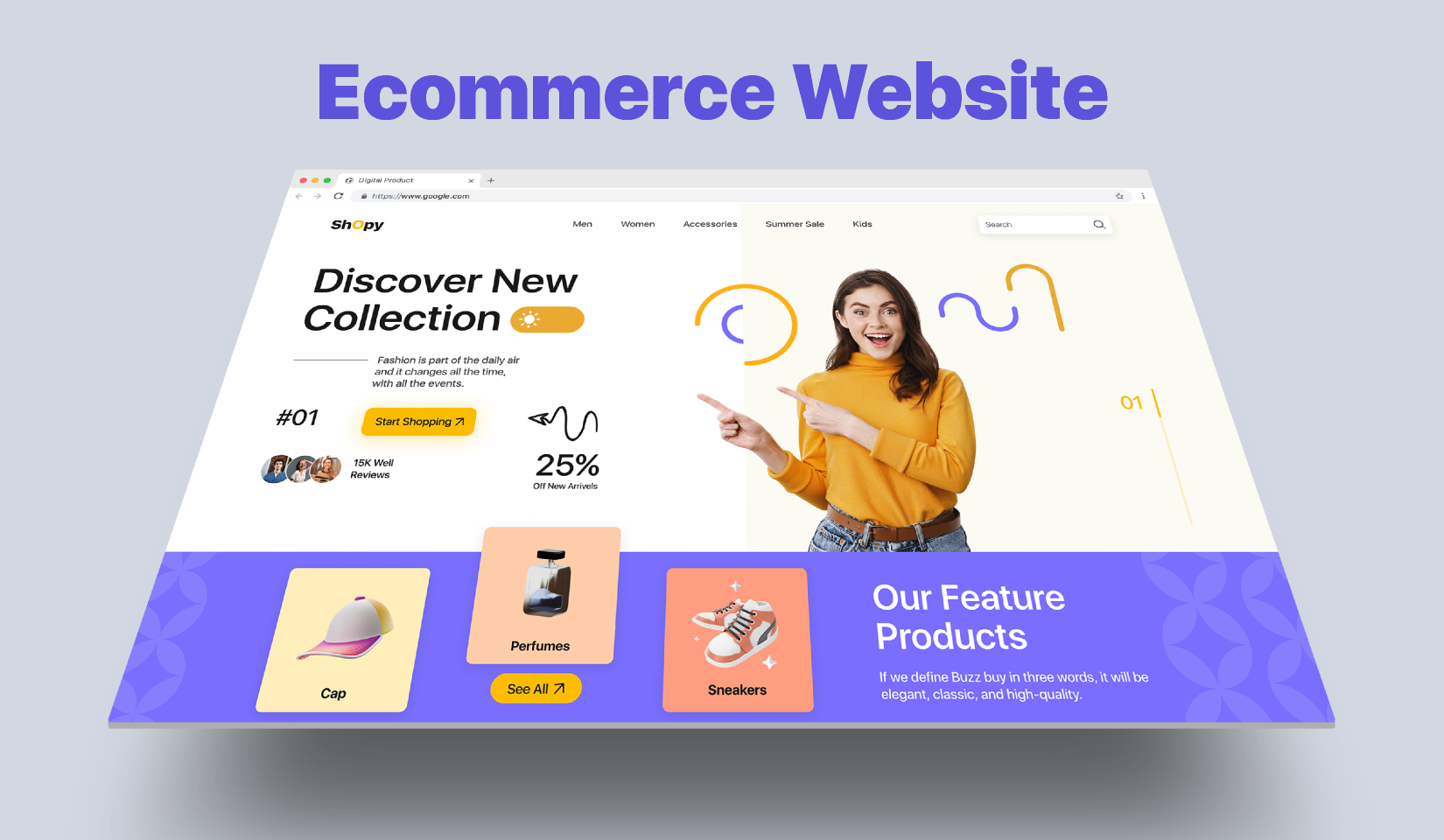
Whether you’re launching your first online store or rebuilding an existing one, this page covers everything you need to know about ecommerce website design in Sydney: what makes it work, which platform to choose, and what to look for in an agency.
What Is Ecommerce Website Design?
Ecommerce website design is the process of planning, designing, and building an online store that allows customers to browse products, add them to a cart, and complete a purchase. But in 2025, it goes much further than that.
A properly designed ecommerce site needs to load fast, look great on every device, rank in Google search results, build trust with first-time visitors, and make the path from product discovery to checkout as frictionless as possible.
Research shows that 93% of consumers consider visual appearance the key deciding factor in a purchasing decision. That means your store’s design is directly influencing whether people buy from you or close the tab and go to a competitor.
Good ecommerce website design in Sydney covers:
- User experience (UX) — How easy it is for customers to find products and complete a purchase
- Visual design (UI) — How your store looks, feels, and reflects your brand
- Mobile optimisation — How the site performs on phones and tablets
- Page speed — How quickly your store loads on any device or connection
- SEO architecture — How well your store is structured for Google to find and rank
- Conversion optimisation — How effectively the site turns visitors into paying customers
- Platform and integrations — The technology your store runs on and connects to
Why Sydney Businesses Need a High-Performing Online Store
The numbers tell a clear story. The Australia Post 2025 eCommerce Report found that 9.8 million Australian households shopped online in 2024, up from 8.2 million in 2019. Mobile devices now drive 65% of all Australian online transactions. And 56% of Australian shoppers say free delivery is their top priority, while 65% say frictionless returns contribute to a great shopping experience.
For Sydney businesses specifically, the competitive stakes are high. Customers have more options than ever, their expectations have been shaped by the likes of Amazon and Kogan, and they will abandon your store the moment they hit friction — a slow page, a confusing menu, a checkout that asks for too much.
The average ecommerce conversion rate sits between 1.88% and 3.9% depending on the industry. That gap between average and excellent is largely explained by design and user experience, not by product quality or pricing.
A well-designed Sydney ecommerce site is your highest-leverage commercial asset. It works 24 hours a day, serves customers across Greater Sydney and beyond, and scales without adding headcount.
Choosing the Right Ecommerce Platform
The platform your store is built on shapes everything from your day-to-day management experience to your long-term scalability. Here is an honest overview of the main options Sydney businesses work with. The right platform depends on your specific business, not on what any agency happens to prefer building with. A good Sydney ecommerce agency will walk you through the trade-offs for your situation before making a recommendation.
Shopify
Shopify is the most widely used ecommerce platform in the world for good reason. It is fully hosted, meaning the infrastructure, security updates, and server management are all handled for you. Business owners can manage products, update content, and process orders without any technical knowledge. It is the strongest choice for consumer brands, fashion, lifestyle, and health products with straightforward catalogues. Monthly subscription fees apply, and there are some customisation limits compared to open-source options.
WooCommerce
WooCommerce is built on WordPress and is open source. There are no platform licensing fees, and the customisation possibilities are nearly unlimited. It requires self-managed hosting and more ongoing technical maintenance than Shopify, but it gives businesses full ownership of their data and far greater flexibility for complex requirements. It is the preferred choice for businesses with existing WordPress sites, unique product configurations, or specific integration needs.
Magento / Adobe Commerce
Magento is an enterprise-grade platform built for scale. It is suited to large retailers, wholesalers, and manufacturers managing hundreds of thousands of SKUs, complex B2B pricing tiers, or multi-store setups. Development and maintenance costs are significantly higher than Shopify or WooCommerce, but the platform’s capabilities are unmatched at that level.
BigCommerce
BigCommerce sits between Shopify and Magento in terms of capability and cost. It has more built-in features than Shopify out of the box, charges no transaction fees, and supports strong multi-channel selling across Google Shopping, Amazon, and social platforms. It is a solid option for mid-market Sydney businesses that are outgrowing Shopify but are not yet at the scale where Magento makes sense.
The right platform depends on your specific business, not on what any agency happens to prefer building with. A good Sydney ecommerce agency will walk you through the trade-offs for your situation before making a recommendation.
Ecommerce Design Best Practices That Drive Sales
Speed Is a Revenue Metric
Google’s Core Web Vitals research shows that as page load time increases from one to five seconds, the probability of a visitor bouncing increases by 90%. A one-second delay in load time is associated with a 7% drop in conversions. Speed is also a direct Google ranking factor, meaning a slow site hurts your visibility in Sydney search results as well as your ability to convert the traffic you do get. Every Sydney ecommerce site should target a load time of under three seconds on mobile.
Mobile-First Is the Standard, Not a Bonus
With 65% of Australian online transactions happening on mobile devices, your store needs to be designed for mobile first, not adapted for it after the fact. The conversion rate gap between desktop (3.9%) and mobile (1.8%) exists primarily because most sites make the mobile experience harder than it needs to be. Thumb-zone navigation, swipeable product images, simplified checkout forms, and Apple Pay or Google Pay integration are the building blocks of a mobile experience that converts.
Google’s Mobile-First Indexing also means the mobile version of your site is what Google uses to determine your rankings. A poor mobile experience directly impacts where you appear in Sydney search results.
Trust Signals Build Confidence and Sales
First-time visitors to your Sydney online store have no reason to trust you yet. Your design needs to close that gap. SSL certification, clearly displayed returns and refund policies (required under Australian Consumer Law), payment security badges, and genuine customer reviews placed near decision points all reduce purchase anxiety and increase conversion rates.
Checkout Optimisation Recovers Lost Revenue
Cart abandonment is the single biggest revenue leak in ecommerce. The most common causes are unexpected shipping costs, forced account creation, and overly long checkout forms. A high-performing Sydney ecommerce checkout offers guest checkout, shows all costs before the payment screen, displays a clear progress indicator, and supports multiple payment methods including Afterpay and Zip, which are increasingly popular with Australian shoppers.
Social Proof Sells
Customer reviews, star ratings, and user-generated content are among the most effective conversion tools available. Displaying reviews on product pages, category pages, and your homepage provides the social validation customers look for before making a purchase. For Sydney businesses, featuring reviews from local customers adds an extra layer of relevance and relatability.
Clear Navigation and Smart Search
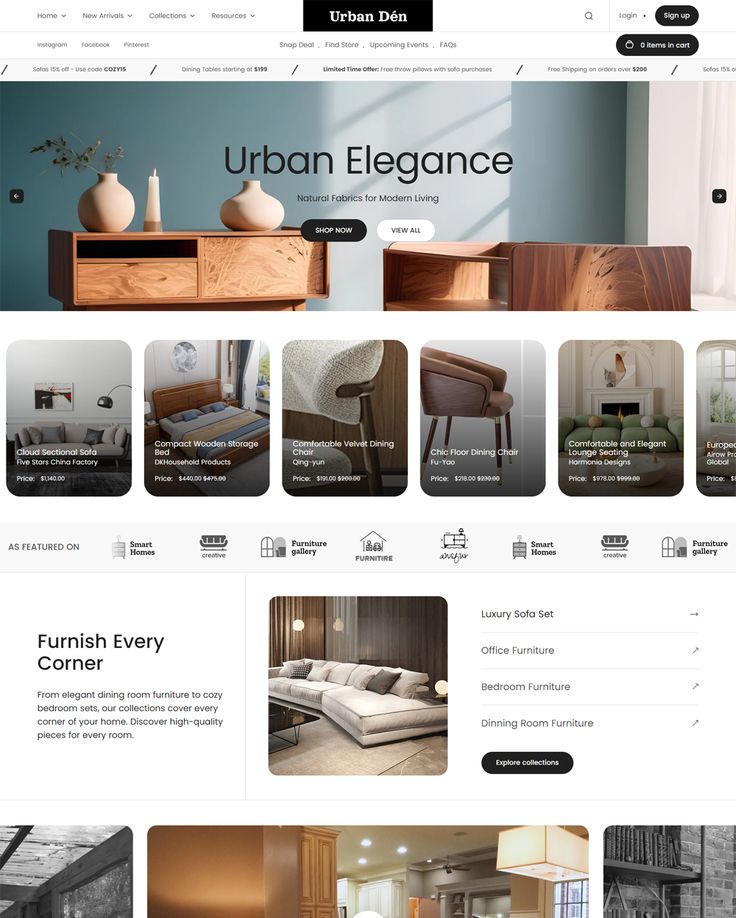
Customers who cannot find what they are looking for within a few clicks leave. Your navigation structure should be built around how customers think about your products, not how you think about your business internally. A visible search bar with smart suggestions, combined with clean filtering and sorting tools, gives shoppers the shortest path from arrival to purchase.
SEO for Sydney Ecommerce Websites
Paid advertising drives traffic immediately, but organic search is the most scalable and cost-effective long-term channel for Sydney ecommerce businesses. Research shows that 46% of product searches begin on Google, making search visibility a direct driver of revenue.
SEO needs to be built into your site’s architecture from day one, not retrofitted after launch.
Clean URL structure helps Google understand your site hierarchy. A URL like yourstore.com.au/womens-running-shoes-sydney is far more effective than yourstore.com.au/product?id=4829.
Unique product page content prevents the duplicate content issues that drag down rankings. Every product needs its own title tag, meta description, and H1 heading, not copy pasted from a manufacturer data sheet that appears on a hundred other sites.
Schema markup for Product, Review, and BreadcrumbList tells Google exactly what your pages contain and can generate rich results including star ratings and pricing directly in search results, which increases click-through rates significantly.
Core Web Vitals are official ranking factors. Your LCP, FID, and CLS scores should be monitored regularly through Google Search Console and PageSpeed Insights, not just checked at launch.
Local SEO is essential for Sydney businesses with a physical presence. Your business name, address, and phone number must be consistent across your website, your Google Business Profile, and the Australian Business Register. This consistency signals legitimacy to both Google and potential customers.
Australian Legal Requirements for Ecommerce Sites
Getting your legal obligations right is not optional, and it needs to be factored into your website design from the beginning.
Australian Consumer Law
Under Australian Consumer Law, administered by the ACCC, Sydney ecommerce businesses must display all pricing inclusive of GST, publish a clear returns and refund policy, and ensure that products match their descriptions. These are mandatory requirements, not best practices.
Privacy Act 1988
The Privacy Act 1988, administered by the Office of the Australian Information Commissioner, requires any business collecting personal information to publish a compliant privacy policy and handle customer data in accordance with the Australian Privacy Principles. If your store collects names, email addresses, or payment information, a privacy policy is a legal requirement.
PCI DSS Compliance
If you accept card payments, PCI DSS compliance applies. Hosted payment gateways like Stripe and PayPal manage most of this on your behalf, but your agency should be aware of the full requirements.
What to Look for in a Sydney Ecommerce Agency
Sydney has many web design agencies claiming ecommerce expertise. Here is how to tell the difference between agencies that deliver results and those that deliver attractive-looking sites that underperform.
Performance, Not Just Presentation
Click through their portfolio sites on your phone. Run them through Google PageSpeed Insights. An agency that builds genuinely high-performing stores will have clients whose sites score well on speed and usability, not just in screenshots.
They Ask Questions Before Quoting
A good agency asks questions before quoting. If an agency is ready to give you a price after a five-minute call, they are not doing the work required to build something that converts. Strong agencies start with your business goals, your customers, your competitors, and your existing challenges.
Post-Launch Support
Ask about post-launch support. Your website is not a one-time project. It requires ongoing updates, security maintenance, performance monitoring, and SEO work. Understand what ongoing support looks like before you sign anything.
Know Who Actually Builds Your Site
Find out who actually builds your site. Many agencies outsource development. That is not inherently a problem, but you deserve to know who is building your store and what quality assurance processes are in place.
The Key Question
Ask one key question. The most revealing question you can ask any prospective Sydney ecommerce agency is this: How will you design this site to improve our conversion rate? Their answer will tell you whether they approach design as a commercial tool or as an aesthetic exercise.
Frequently Asked Questions About Ecommerce Website Design in Sydney
How long does it take to build an ecommerce site in Sydney?
Most projects take between six and fourteen weeks from kickoff to launch. A template-based Shopify store can often be completed in four to six weeks. A fully custom build with complex integrations may take four to six months. The most common cause of delays is waiting on client-supplied content, product images, and approvals.
Do I need my own hosting for a Sydney ecommerce site?
Shopify and BigCommerce are hosted platforms, so infrastructure is included in your monthly subscription. WooCommerce and Magento require you to arrange separate hosting. Managed WordPress hosting providers like WP Engine and Kinsta are popular choices among Sydney ecommerce businesses for their reliability and performance.
What payment methods should my Sydney online store accept?
The most widely used options in Australia are Stripe, PayPal, eWAY, and Afterpay or Zip for Buy Now Pay Later. According to the Reserve Bank of Australia, BNPL solutions are growing at 14.7% per year and are particularly valu
What is a good conversion rate for a Sydney ecommerce site?
The current average sits between 1.88% and 3.9% depending on the industry and traffic source. If your store is converting below 1%, that is a strong signal that user experience, page speed, or trust signals need attention. Use Google Analytics 4 to track your conversion funnel and identify exactly where visitors are dropping off.
Do I need to comply with Australian laws on my ecommerce site?
Yes. Under Australian Consumer Law, you must display GST-inclusive pricing, publish a returns policy, and ensure products match their descriptions. You also need a privacy policy that complies with the Privacy Act 1988 if you collect any customer data. Your web agency should be across these requirements.
Ready to Build Your Ecommerce Website?
We design high-performing ecommerce websites in Sydney that drive sales. Let us help you create an online store that converts visitors into customers.